
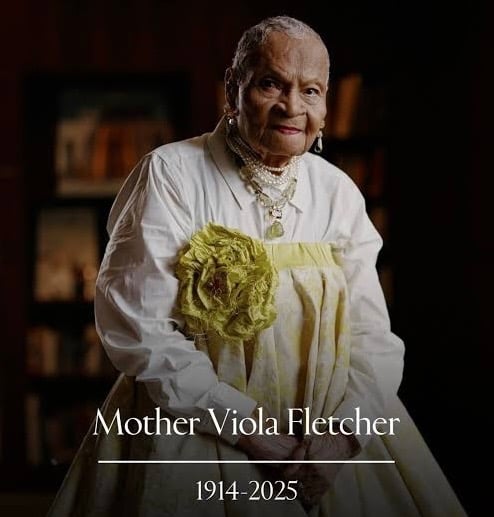
Viola Fletcher, Lasting Witness of the Tulsa Race Massacre, Dies at 111
FEATURED ARTICLESTRUE HISTORYNEWS & HEADLINES
11/25/20252 min read
Viola Fletcher, Lasting Witness of the Tulsa Race Massacre, Dies at 111
A century after surviving one of America’s darkest chapters, she became its loudest, clearest voice.
America has lost a living link to one of its greatest injustices. Viola Fletcher, the oldest survivor of the 1921 Tulsa Race Massacre — and one of the last remaining witnesses to the destruction of Black Wall Street — has passed away at 111 years old.
Her death was announced in a statement by Tulsa Mayor Monroe Nichols, marking the end of a chapter that stretched from Jim Crow segregation to today’s ongoing fight for racial justice. Only one survivor now remains: Lessie Randle, also 111.
A Childhood Interrupted by Terror
Fletcher was just 7 years old when the prosperous, majority-Black Greenwood community was invaded by white mobs in a violent, coordinated assault. Greenwood — home to nearly 10,000 Black residents and proudly known as Black Wall Street — was an oasis of Black entrepreneurship, culture, and stability in an era of racial hostility.
She remembered the sweetness of her early childhood:
• Her stepfather, Henry Ellis, working multiple jobs to provide.
• Wednesday and Sunday church services at the local Baptist church.
• Neighborhood men churning homemade ice cream.
• Women bringing pies, layer cakes, and joy into community gatherings.
Then came May 31 and June 1, 1921 — the days that changed everything.
White residents, fueled by racism and false accusations, tore through Greenwood with guns, firebombs, and airplanes. Homes and businesses were reduced to ashes. As many as 300 Black people were killed, and thousands more were left homeless.
For years, Fletcher carried those memories in silence. America looked away. Tulsa buried the truth. And survivors were left to rebuild their lives with no compensation, no recognition, and no justice.
A Voice the Nation Could No Longer Ignore
In 2021, at 106 years old, Viola Fletcher stepped into the U.S. Capitol and delivered testimony that shook the country. With a steady voice, she told lawmakers:
“I still see Black men being shot, Black bodies lying in the street… I have lived through the massacre every day.”
Her courage helped reignite national awareness of the massacre and renewed calls for reparations. She did not seek pity — only accountability.
Fletcher became, in her final years, a symbol of resilience, memory, and the refusal to let history be whitewashed or forgotten.
A Century-Spanning Legacy
Viola Fletcher lived long enough to see America finally acknowledge what she endured as a child. Her life was a testament to the power of survival — and the responsibility to tell the story.
She leaves behind a legacy written not just in grief, but in strength. Her testimony kept the truth alive. Her presence reminded the world that the wounds of Tulsa were not ancient history — they were living memory.
And now, as another witness passes on, the responsibility to carry that truth forward falls to us.