
Celebrating the Life of Rev. Jesse Louis Jackson
Jesse Jackson 1941-2026
NEWS & HEADLINESFEATURED ARTICLES
2/17/20264 min read
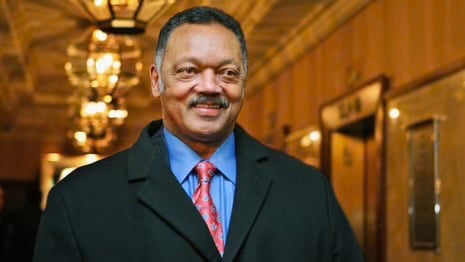
Celebrating the Life of Rev. Jesse Louis Jackson
Honoring the Legacy, the Work, and the Enduring Spirit of a Civil Rights Giant
By Maurice Woodson
Rev. Jesse Louis Jackson Sr. has spent more than six decades bending the moral arc toward justice. At 84 years old, now facing serious health challenges and recently hospitalized on November 12 under observation for progressive supranuclear palsy, he remains a towering symbol of courage, conviction, and unrelenting advocacy.
No one knows how much time he may have left — and that is exactly why now is the moment to celebrate him. To honor the life he lived, the battles he fought, the doors he opened, and the global impact of a man who stood firm in his moral compass even when it cost him.
Rev. Jackson’s legacy is woven into the fabric of Black America’s ongoing fight for freedom. His story deserves not only to be remembered — it deserves to be lifted.
A Beginning Shaped by Faith, Struggle, and Opportunity
Born Jesse Louis Burns on October 8, 1941, in Greenville, South Carolina, his early years were marked by the complexity of being Black in the Jim Crow South. After his mother married Charles Jackson, he took his stepfather’s last name — a symbolic merging of new identity and new responsibility.
A gifted student and athlete, Jackson first attended the University of Illinois before transferring to North Carolina A&T State University, where he found both purpose and a platform. His education in sociology sharpened his understanding of the systems he later spent a lifetime challenging.
After college, guided by faith, he attended the Chicago Theological Seminary, eventually becoming an ordained Baptist minister. But even before the pulpit came calling, activism had already gripped his spirit.
Awakening: Joining the Civil Rights Movement
It was in the early 1960s, during the height of civil unrest, that Jackson stepped into national consciousness. As a young student in Greensboro, he protested segregation — a prelude to the larger movement he would soon help lead.
His life changed permanently in 1965, when he met Dr. Martin Luther King Jr. Inspired, Jackson joined the Southern Christian Leadership Conference (SCLC) and quickly became one of King’s most trusted young lieutenants.
He was soon appointed to lead Operation Breadbasket in Chicago — an SCLC program focused on economic empowerment, job access, fair hiring, and using economic pressure to force corporate accountability. Under Jackson’s leadership, Operation Breadbasket not only grew — it flourished, becoming a national model for Black economic organizing.
When King was assassinated in 1968, Jackson became part of the generation tasked with carrying the torch forward — and he did so fearlessly.
Operation PUSH and the Birth of a National Leader
In 1971, Jackson stepped away from the SCLC and formed Operation PUSH (People United to Save Humanity). It was a bold move — a declaration that the fight for civil rights needed new institutions, new energy, and new strategy.
PUSH became the bedrock of his activism:
Organizing for economic justice
Demanding corporate responsibility
Advancing youth education through PUSH Excel
Using moral authority to pressure America into ethical accountability
The organization soon became a home for thousands who believed in collective empowerment, community uplift, and self-determination.
By the early 1980s, Jackson expanded his vision further, founding the National Rainbow Coalition, a multiracial, multi-issue movement advocating for racial justice, environmental equity, workers’ rights, LGBTQ rights, peace, and international human rights.
In 1996, PUSH and the Rainbow Coalition merged into what we know today as the Rainbow/PUSH Coalition, one of the longest-running civil rights institutions in American history.
The Presidential Runs That Changed American Politics
In 1984 and again in 1988, Jackson took his message to the national stage, running for President of the United States. Though he didn’t win the Democratic nomination, his campaigns were seismic. He shattered assumptions about who could run — and who could win.
He amassed millions of votes.
Registered millions of new voters.
Built a multiracial grassroots coalition before the term existed.
Won several primaries and caucuses.
And forced America to confront issues it preferred to ignore:
discriminative hiring
corporate divestment
police brutality
poverty
global apartheid
voter suppression
economic inequality
His message was radical for its time and foundational for the politicians of today. Many who stand in power now walk through doors that Jesse Jackson pried open with his bare hands.
A Global Peacemaker and Diplomat
While Jackson is often celebrated for domestic activism, his international diplomacy cemented his status as a global humanitarian.
He traveled abroad repeatedly — not for photo ops, but for life-and-death missions:
negotiating the release of American hostages
advocating for peace in the Middle East
speaking against apartheid in South Africa
meeting with world leaders to promote human rights and democracy
Wherever conflict arose, Jackson used his voice — and his presence — to push for peace. And he achieved results many thought impossible.
Honors, Recognition, and the Power of a Moral Voice
In 2000, Jackson was awarded the Presidential Medal of Freedom, the highest civilian honor in the United States. It was recognition not just of his civil rights work, but of his global moral leadership.
Over the years he has also received:
The Spingarn Medal
Numerous NAACP awards
International peace and justice honors
Dozens of honorary degrees
Yet through all the accolades, Jackson never strayed from his mission: to uplift the poor, empower the marginalized, and speak truth to power — loudly, consistently, unapologetically.
His Final Chapter: The Spirit Still Fights
Jackson announced in 2017 that he had been diagnosed with Parkinson’s disease, a battle many watched with admiration and heartbreak.
In 2025, his health worsened with a diagnosis of Progressive Supranuclear Palsy (PSP) — a rare, debilitating neurodegenerative disorder. On November 12th, he was hospitalized for complications.
But even there — even now — his spirit has not dimmed.
Family reports say he is stable, breathing on his own, and still thinking about service.
One of his last public requests?
That 2,000 churches prepare 2,000 food baskets for families this holiday season.
Even in frailty, he is calling us to serve.
Even in sickness, he remains a vessel for justice.
A Legacy That Cannot Be Contained
Rev. Jesse Jackson’s life was not without controversy or complexity — few great leaders’ lives are. But his impact is undeniable. His courage reshaped American politics. His diplomacy saved lives abroad. His organizing built institutions that still stand today.
And his voice — that booming, prophetic voice — remains one of the most recognizable sounds of 20th- and 21st-century Black activism.
He taught us:
“Never look down on anybody unless you’re helping them up.”
He lived by that creed.
He preached it, marched it, negotiated it, sacrificed for it.