Why Is the Government and Media Ignoring the Murders and Hangings of Black People?
A BlackZone Magazine Special Investigation into suspicious deaths, rapid suicide rulings, missing evidence, family demands for answers and the growing call for independent investigations.
By Maurice Woodson · 8/20/2026 · 18 min read
Why are so many Black people being found dead under circumstances that immediately raise questions—only for those questions to be followed by official statements that seem to close the door before grieving families have even had time to understand what happened?
A Black person is found hanging from a tree.
A Black teenager disappears and is later found dead.
A young Black man is found hanging outside a college cafeteria.
A Black college student is found hanging from a tree in the middle of a university campus.
A Black woman is found dead in a hotel room thousands of miles from home after a reported dispute with her fiancé.
And now, another Black teenager is dead after a Fourth of July trip, with his family, civil rights attorney Ben Crump, the NAACP and members of the Congressional Black Caucus demanding answers and federal scrutiny. And I'm sure there are several other cases that just have not made it to news outlets or social media streams.
In case after case, the circumstances have generated questions from families and members of the Black community.
And in some cases, the initial official explanation has been challenged by information that emerged later—or by independent examinations that did not produce the same certainty.
That does not prove that every death was a murder, but it does shine a light on a certain behavior of law enforcement when it comes to Black deaths - especially when they are suspicious in nature.
It does, however, raise another question that should be much harder for authorities, politicians and the media to dismiss:
Are Black families being given enough information, enough evidence and enough independent scrutiny to trust the conclusions being presented to them?
For many Black Americans, the answer is increasingly no, and with good reason.
This Is Not Just About One Death
The concern cannot be reduced to a single case.
It is the accumulation of cases along with an undeniable history.
In the past year, Black families have confronted a series of deaths involving hanging, unexplained disappearances, bodies discovered in isolated locations and circumstances that have generated demands for additional investigation.
Among them:
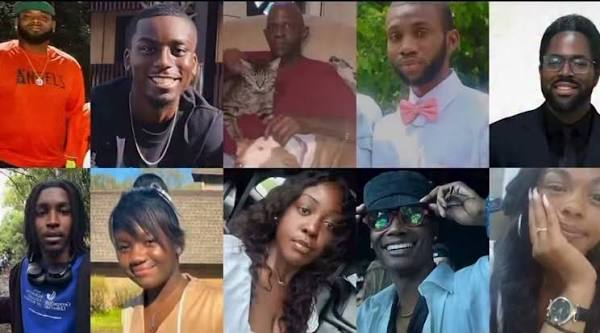
Justice Kai James, 21, was found unresponsive outside the cafeteria at the Turner Job Corps Center in Albany, Georgia, in June 2026. Police described the death as suspicious and said an autopsy would be conducted. His family publicly demanded answers, saying they were given little information about what had happened.
To’Nea Nicole Miller, 27, was found dead near Gwen Cherry Park in Miami on June 18, 2026. Authorities said the circumstances were consistent with suicide and that investigators had found no evidence of foul play. Her family challenged that conclusion and demanded answers.
Juliana Nzita, 16, was reported missing in Charlotte, North Carolina, on April 28. Ten days later, her body was found hanging from a tree on property connected to the United House of Prayer for All People. Charlotte-Mecklenburg police classified the death as a suicide. The case nevertheless generated continuing questions about the circumstances of her disappearance and death.
Demartravion “Trey” Reed, 21, was found hanging from a tree near the pickleball courts at Delta State University in Mississippi in September 2025. Authorities ultimately ruled his death a suicide, but questions from Reed’s family and supporters continued, including calls for an independent examination.
And then there is Nolan Xavier Wells.
His case illustrates almost perfectly why families are demanding that suspicious deaths receive independent scrutiny.
Nolan Xavier Wells: The Questions Keep Multiplying
Nolan Xavier Wells was 18 years old when he disappeared during a Fourth of July trip to Horn Island, Mississippi, with friends.
His body was recovered from the water two days later.
Initially, authorities indicated that they suspected drowning. But almost immediately, questions emerged about what happened between the time Nolan arrived at the island and the time his body was discovered.
His parents did not accept the explanation that their son simply decided to remain behind while the others left.
They retained civil rights attorney Ben Crump and called for a thorough and transparent investigation.
But as investigators began examining the circumstances, additional questions emerged.
And this is where the Nolan Wells case becomes particularly important.
The 911 Call
Recovered emergency-call evidence has become part of the investigation.
Enhanced audio from a 911 call made from the boat has raised questions about the timeline and the account provided by people who were with Nolan.
According to reporting on the enhanced recording, investigators and others examining the audio have focused on sounds in the background and statements that appear to raise questions about whether Nolan was still on Horn Island when the boat left.
The enhanced recording has been interpreted as potentially capturing someone asking, “Is he dead?” during the emergency call.
That does not establish what happened to Nolan.
It does not prove that the people on the boat killed him.
And audio enhancement can itself be subject to interpretation.
But it is evidence that deserves to be examined—not dismissed.
Because if the emergency recording contradicts important portions of the timeline provided by witnesses, those contradictions must be resolved.
The question should be simple:
What actually happened on Horn Island?
Not what someone thinks happened.
Not what social media believes happened.
Not what makes the investigation easiest.
What does the evidence show?
Then There Is Nolan’s Phone
There is another piece of evidence that has generated enormous concern: Nolan’s cellphone.
The phone was recovered from people who had been with him during the trip and was eventually returned to his family.
The Wells family raised concerns that messages appeared to have been deleted from the device before it was returned.
Attorney Ben Crump publicly raised the issue of deleted messages, and the family and prosecutors subsequently agreed to a joint inspection of the phone.
That distinction is important.
At this point, the existence of concerns about deleted messages is documented.
What those messages contained—and why they were deleted—is a separate question.
That is precisely why the phone needs to be forensically examined.
If messages were erased, investigators need to determine: Who deleted them? When were they deleted? What applications were involved? Can the messages be recovered? Was the deletion intentional? Did the deletion occur before or after Nolan disappeared? Who had possession of the phone? What other digital evidence exists?
These are not conspiracy questions.
They are investigative questions.
And digital evidence can potentially answer them.
The Independent Autopsy Changed the Conversation
Perhaps the most important development came from the independent autopsy commissioned by Nolan’s family.
The independent forensic examination concluded that the cause and manner of Nolan Wells’ death were undetermined.
That does not establish homicide.
But it also does not establish accidental drowning.
The independent pathologist said the condition of the body and the fact that organs had already been removed during the Mississippi medical examiner’s examination limited what could be determined.
That should matter to anyone concerned with getting to the truth.
Because an independent autopsy did not simply provide another version of the same conclusion.
It said: We don’t know due to not having the access to ascertain all the facts.
And sometimes, “we don’t know” is the most scientifically honest answer available.
When the Evidence Doesn’t Fit the Story
This is where the conversation needs to change.
The issue is not whether Black people should automatically believe that every unexplained death is murder, however--understanding racism in this country, the MAGA mentality, and the history of this country, it is understood why suspicion is always first on our minds.
The issue is whether investigators are following every piece of evidence when that evidence does not fit the initial narrative.
If witnesses provide one timeline and recovered evidence suggests another, investigate the discrepancy.
If a phone contains missing or deleted information, recover it.
If an emergency call raises questions, analyze it.
If an independent autopsy reaches an undetermined conclusion, don’t pretend the case has been solved.
If families say the evidence they were given doesn’t answer their questions, show them what can legally be shown.
And if information cannot be released because of an active investigation, explain that clearly, without blatant lies, cover-ups, or false statements design to mislead and stop the asking of questions.
Transparency is a requirement and not an option.
The Problem With “Suicide” as an Instant Explanation
When authorities say a person died by suicide, that is supposed to be the conclusion of an investigation—not the beginning of one.
A family should be able to ask: What evidence established suicide? What physical evidence was recovered? What did the autopsy show? What did toxicology show? Was DNA recovered? Were fingerprints recovered? Were photographs taken at the scene? Was video surveillance available? Were cellphones examined? Were text messages and social media accounts examined? Were witnesses interviewed? Were potential witnesses independently re-interviewed? Was the scene preserved? Was the body examined by an independent forensic pathologist? Were injuries consistent with the official explanation? Was the position of the body consistent with the alleged manner of death? Were there defensive injuries? Was there evidence of restraint? Was there evidence that another person could have been present?
And perhaps most importantly: What evidence ruled out homicide?
These are not unreasonable questions.
They are basic investigative questions.
Who Performs the Autopsy?
There is another issue that deserves considerably more public discussion: independence.
Black families are increasingly asking whether the same medical examiner’s offices, coroners, law-enforcement agencies or interconnected investigative systems are repeatedly responsible for examining deaths that those same systems are responsible for explaining.
When the public is being asked to trust an investigation, the people conducting the investigation must also be perceived as independent from the people whose actions or decisions may ultimately be questioned.
The Nolan Wells case demonstrates why that concern matters.
His family sought an independent forensic examination.
That examination concluded that the cause and manner of death were undetermined.
The independent pathologist also raised limitations created by what had already occurred during the initial examination, such as the removing and discarding of organs necessary to make a determination.
Black America Has a Memory
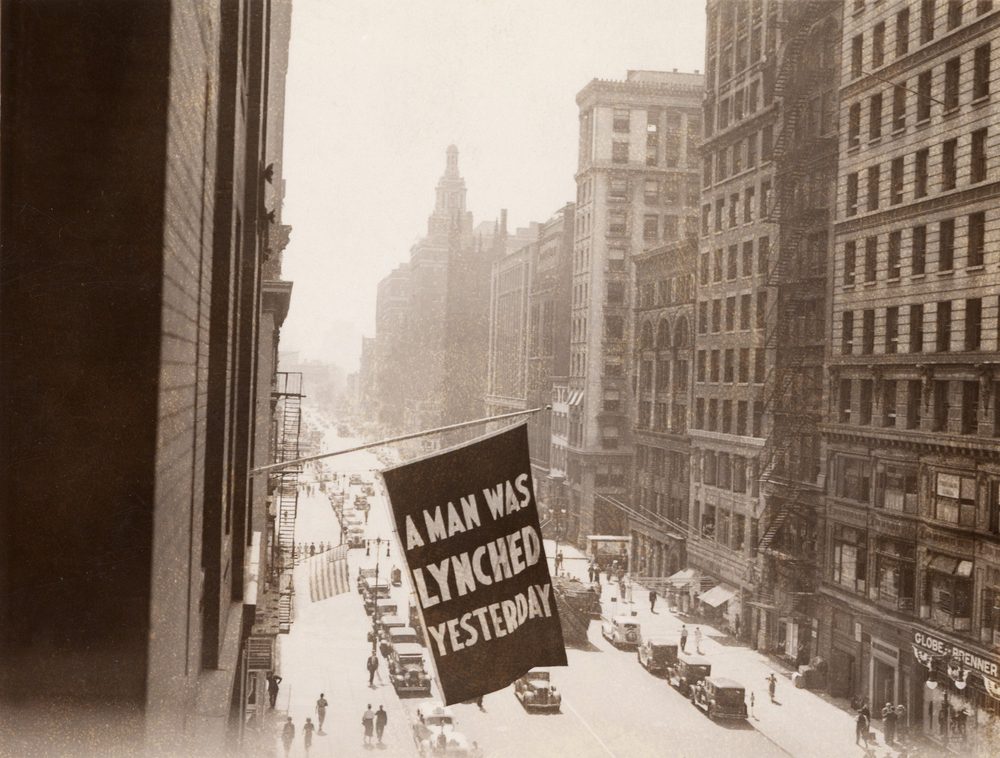
That weight did not appear out of nowhere.
Black Americans remember.
We remember trees. We remember ropes. We remember photographs. We remember postcards. We remember bodies displayed publicly as warnings to entire communities.
We remember that lynching was not merely a collection of isolated murders. It was a system of racial terror.
The Equal Justice Initiative has now documented nearly 6,500 racial-terror lynchings between 1865 and 1950. Its expanded Reconstruction research identified nearly 2,000 additional lynchings between 1865 and 1877 that had not been included in earlier major counts. EJI also explicitly warns that thousands more Black people were killed in racial terror violence whose deaths may never be discovered or documented.
And that last point matters. And here is something else...Lynchings and racial murders have NEVER stopped...not to this day regardless of how politicians and the media frame it.
The documented number is obviously not the actual number.
History cannot count victims whose names were never recorded. It cannot count people whose bodies were never recovered. It cannot count people murdered in isolated woods, swamps, fields, waterways or back roads where no newspaper reporter arrived. It cannot count people whose deaths were never entered into official records. It cannot count people whose killers never confessed. It cannot count people whose families were too frightened to speak. It cannot count victims whose deaths were deliberately concealed. It cannot count every Black person who simply disappeared.
That is not speculation about a specific historical victim. It is a limitation of historical documentation itself.
EJI’s own research acknowledges that thousands of Black people killed by racial terror may never be discovered.
And that means when someone says, “There were only this many lynchings,” the honest response is: Those are the cases we can document. Not every person who was murdered.
The Violence That Never Made the Records
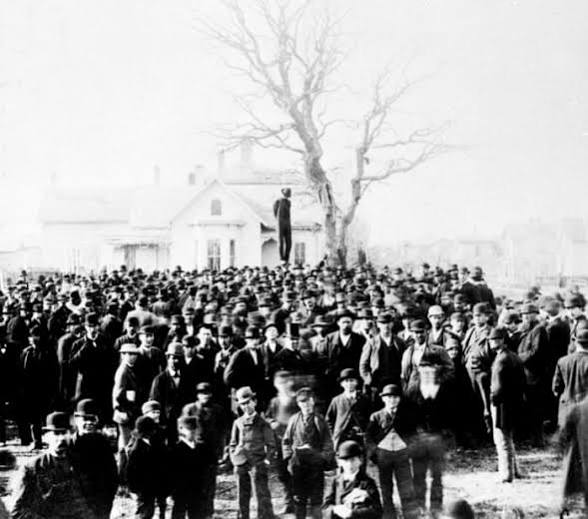
This is one of the darkest parts of America’s racial history.
A lynching did not require a newspaper article. It did not require a police report. It did not require a coroner. It did not require a courtroom. And it certainly did not require the killers to admit what they had done.
A Black person could be taken into the woods. Dragged into a swamp. Shot on an isolated road. Thrown into a river. Burned. Beaten. Hanged. And disappeared.
If nobody with the power to document the killing chose to document it, the victim could disappear from the historical record almost as completely as they disappeared from the earth.
That is why documented lynching numbers should never be treated as a complete census of racial murders.
They are records of what was found, reported, investigated or preserved.
And history has repeatedly demonstrated that Black death was not always considered worthy of investigation.
And That History Matters Today
When a Black person is found hanging from a tree today, Black America does not encounter that image in a historical vacuum.
We know what happened to Black bodies hanging from trees in America.
We know that many of those murders were committed publicly. We know that crowds sometimes gathered. We know that photographs were taken. We know that law enforcement officers sometimes participated or stood by. We know elected officials sometimes tolerated the violence. We know perpetrators frequently escaped punishment.
The Equal Justice Initiative describes racial-terror lynching as violence used to terrorize Black communities and notes that government officials frequently tolerated, condoned or failed to stop the violence.
So when another Black person is found hanging from a tree, the reaction cannot simply be: “It’s probably suicide. Move on.”
For Black America, the historical context makes that impossible.
The Media Has a History Too

The media has never been a neutral observer of racial violence in America.
There were generations when lynchings occurred and received little or distorted coverage.
Some newspapers repeated the accusations used to justify mob violence.
Others treated lynching as an unfortunate but understandable response to alleged crimes.
And many Black victims disappeared from national consciousness almost immediately.
That history is important because it helps explain why Black communities frequently distrust the media’s treatment of racial violence.
The question is not simply: “Why didn’t CNN cover this?”
The deeper question is: Who decides which Black deaths deserve sustained attention? Who decides when a death becomes a national story? Who decides when a family’s questions are newsworthy? Who decides when an investigation is worth following? And who decides when the story is over?
Social Media Changed Who Controls the Story
There is one major difference between today and previous generations: Black people now have our own distribution system.
Social media has fundamentally changed who gets to decide which stories become visible.
Before Facebook, Instagram, TikTok, X, YouTube and other digital platforms, a grieving family could believe something was terribly wrong and still have virtually no ability to force national attention.
Today, a mother can post. A sibling can post. A student can post. A community organizer can post. A civil rights attorney can post. A caring empathetic citizen can post.
A video can spread to millions of people before a traditional newsroom decides whether the story is worth covering.
That does not mean everything online is true.
It means the traditional media gatekeepers no longer have complete control over what Black America sees.
And that matters.
Because many stories that eventually reach national attention first became visible because Black people refused to let them disappear.
But What About the Cases That Never Go Viral?
This may be the most disturbing question of all.
For every case that becomes nationally known, how many never do?
How many families do not have Ben Crump? How many cannot afford an independent autopsy? How many do not know how to request investigative records? How many do not have thousands of followers? How many do not know a journalist? How many families accept an official explanation because they have no other choice? How many deaths never generate a hashtag? How many Black mothers cry privately while a case disappears from the news cycle?
We do not have a reliable national database that allows us to answer those questions. That is not by accident, its intentional.
So for now we demand that you show us the evidence.
Explain the timeline. Release appropriate records. Preserve surveillance footage. Explain forensic findings. Recover digital evidence. Tell families what happened. Allow independent examinations when credible questions exist.
And when evidence remains inconclusive, say that it remains inconclusive and then explain why.
If the evidence ultimately confirms suicide, say so, along with details and evidence. If it confirms an accident, say so. If it establishes homicide, prosecute it.
If it cannot establish a cause or manner of death, say: We don’t know yet.
That is what an honest investigation looks like.
This Is Not Normal
Black people being repeatedly found dead in public spaces under circumstances that generate serious questions should not become normal.
A Black teenager disappears and is later found dead. A Black college student is found hanging from a tree on campus. A Black woman is found hanging near a public park. A Black student is found hanging outside a campus building. A Black teenager dies after a trip with friends, while digital evidence, emergency-call evidence and witness accounts raise questions about the timeline.
Each case may ultimately have a different explanation. Some may be exactly what they are suspected to be...probably more than not.
But collectively, they demand attention.
Families deserve certainty when certainty is possible—and honesty when it is not.
The Question Black America Is Asking
So, why is the government and media ignoring the murders and hangings of Black people?
That is the question that will never go away.
There is a documented history of Black racial violence being minimized, misrepresented, poorly investigated or omitted from the historical record.
There is a continuing distrust between Black communities and institutions responsible for investigating deaths...and again for good reason.
And there are contemporary cases in which families, attorneys and civil rights organizations have publicly argued that the initial investigation was insufficient.
That reality deserves attention.
Why must mothers search for answers? Why must siblings demand records? Why must attorneys force agencies to release information? Why must social media make a case impossible to ignore before the wider public pays attention?
And why, after generations of racial violence, are Black people still being asked to accept unexplained deaths without asking uncomfortable questions?
We Remember. We Question. We Demand Answers.
America has spent generations telling Black people to trust the system that has mistreated them, lied to them, racially profiled and abused them, wrongfully arrested them, and murdered them without cause or reason.
There is a history of law enforcement and political figures participating in the murders and lynchings of Black people in this country. In this political environment, is there any reason why anyone would believe that isn't still the case. No, it's not out of the question--and therein lies the problem.
The media needs to do better! Politicians to stop looking at everything through a racist and party lens, and simply be human and empathetic.
How hard is that?